1. Introduction: Airline Retailing Meets LLMs
The airline industry is at the edge of its biggest digital leap since NDC. Generative AI and large language models (LLMs) are stepping beyond hype to help carriers shift from static fares to responsive retailing. LLMs interpret intent, orchestrate product rules, and keep teams aligned with IATA’s Modern Airline Retailing vision where Offer and Order Management replaces legacy ticketing.
LLMs learn from vast text corpora and domain-tuned data. In airline retailing they can parse PNR remarks, fare footnotes, servicing policies, and the unstructured customer context that traditional rule engines miss. Paired with real-time Offer and Order Management, they accelerate how airlines sense demand, curate ancillaries, and serve travelers across channels.
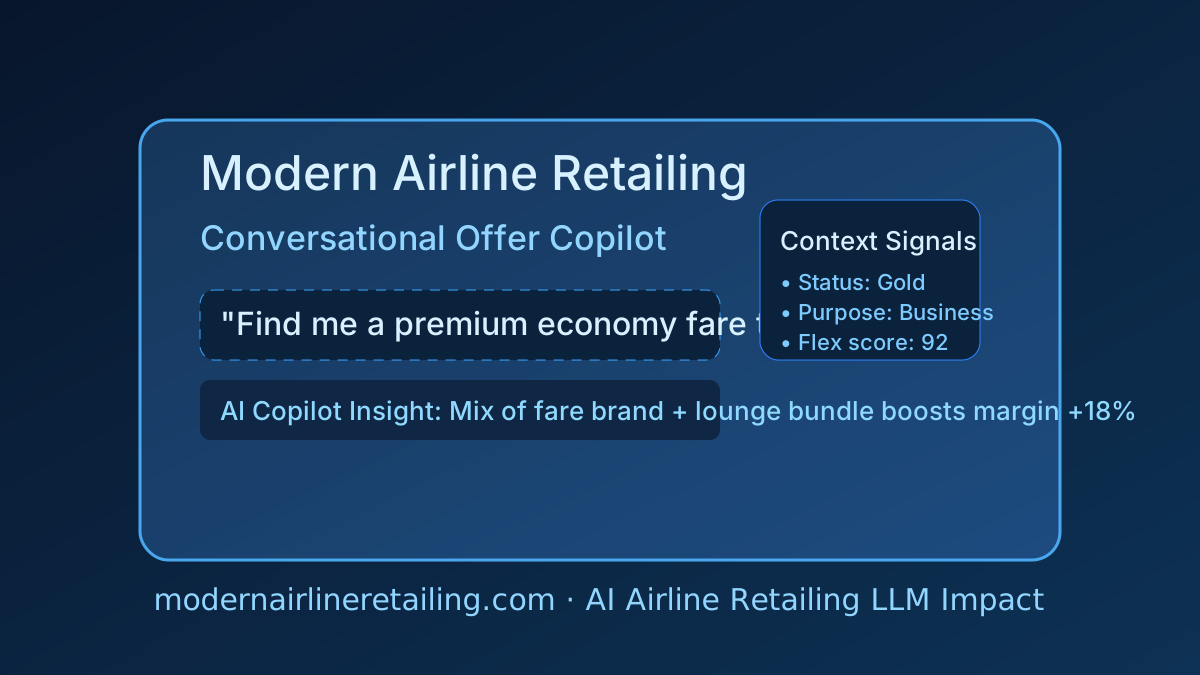
“Generative AI is the connective tissue between data-rich airline systems and the retail experiences passengers now expect.” - Adapted from IATA Modern Airline Retailing Whitepaper, 2024.
2. What Are LLMs and Why Airlines Should Care
Large language models such as GPT-4, Claude, or Gemini transform text into structured understanding. They rely on transformer architectures that recognize word relationships and context across billions of parameters. When grounded with airline data-ATPCO fare filings, schedule messages, servicing policies-they become fluent in industry vernacular.
For airlines, LLMs act as context engines. They can map traveler intents (“Need a same-day change for a family of four”) to Offer and Order actions, summarize 500 lines of fare rules into traveler-friendly guidance, or translate EDIFACT messages into NDC-ready product descriptions. This aligns with IATA’s Offer and Order blueprint: dynamic offers, streamlined orders, and trusted data exchange.
- Understanding unstructured data: call transcripts, disruption notes, special service requests.
- Reasoning across policies: combining fare rule paragraphs, ticketing time limits, and waiver codes.
- Generating natural responses: omnichannel messaging that matches brand tone while staying compliant.
3. Real-World Airline Applications
Leading carriers, technology providers, and alliances are already pairing LLMs with retail modernization programs.
3.1 Offer Personalisation at Scale
LLMs analyze loyalty data, previous trip patterns, and contextual signals (purpose, season, travel party) to assemble bundles. By scoring products against customer intent, they surface the right mix of seat, bag, lounge, and carbon options. Airlines running pilots report up to 10–25% improvement in conversion, consistent with McKinsey’s 2023 aviation AI outlook. They also reduce manual merchandising cycles from weeks to hours.
3.2 NDC Content Management and Legacy Translation
LLMs reduce friction between legacy EDIFACT feeds and NDC schemas. They can inspect filed tariffs, decode category rules, and map them into API-ready attributes. This mirrors initiatives from Google Cloud and Amadeus (2023) where AI assists in cleaning and normalizing airline content.
3.3 Agent Assistance and Service Recovery
LLM copilots arm call center and airport agents with real-time instructions. They summarize fare restrictions, highlight applicable waivers, and propose compliant reissue options. According to McKinsey, LLM-enabled automation can reduce servicing handling time by 30–40%, freeing agents to focus on high-empathy tasks.
3.4 Chat-Driven Sales and Dynamic Pricing
Conversational booking bots infused with dynamic pricing respond instantly with personalized offers. Lufthansa Group and IBM have experimented with cognitive retail assistants that negotiate seat upgrades in-channel, improving upsell conversion without increasing call volume.
3.5 Predictive Merchandising & Timing
LLMs ingest telemetry-search abandonment, itinerary complexity, ancillaries previously rejected-to recommend the optimal moment to present a product. Predictive merchandising platforms report ancillary attach improvements of 12–18% when AI sequences the offer, aligning with case studies cited in IATA’s 2024 Modern Airline Retailing reports.
4. Data & Insights to Ground the Hype
Investment Momentum
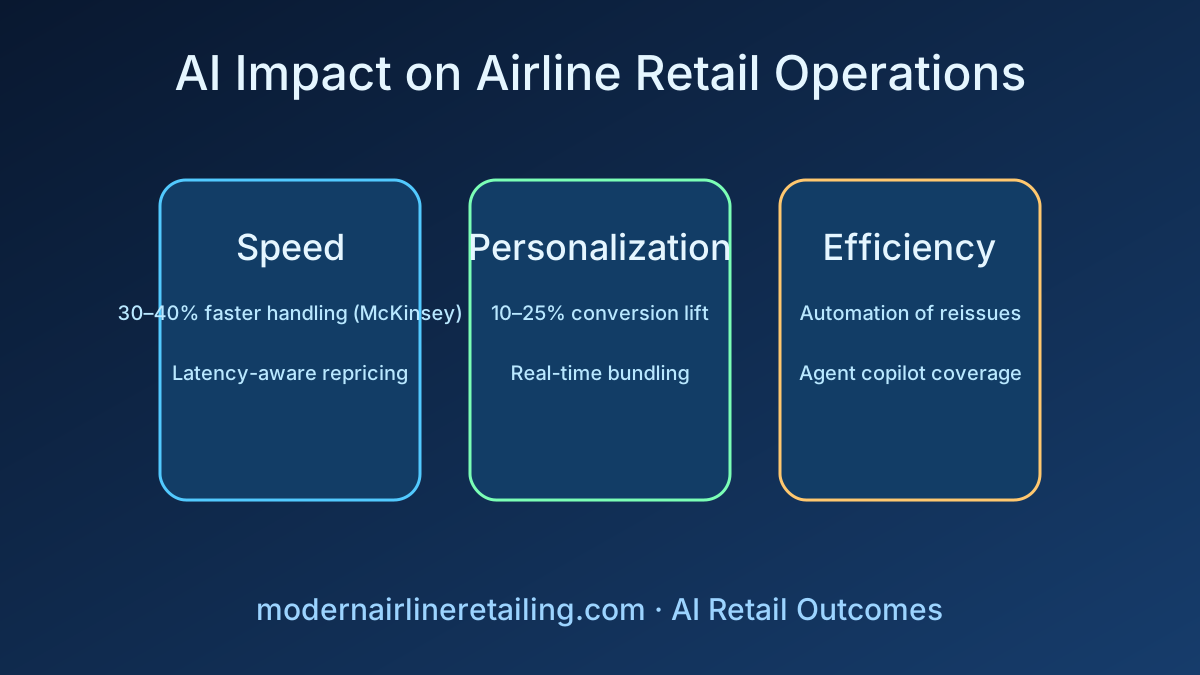
65% of airlines are already investing in AI-led retailing initiatives according to IATA’s Modern Airline Retailing whitepaper (2024). Budget allocation prioritizes Offer and Order pilots, data quality, and servicing automation.
Operational Efficiency
30–40% reduction in customer service handling time is achievable with LLM copilots, based on McKinsey analysis of contact center transformations.
Merchandising Gains
10–25% uplift in conversion and ancillary attachment emerges when AI sequences offers and price points, backed by IBM–Lufthansa experimentation and data from leading Offer Management pilots.
These numbers are not theoretical. Airlines that modernized merchandising pipelines-linking ATPCO fare filing discipline with telemetry feedback loops-built the data foundations that LLMs now leverage. With clean product catalogs and unified IDs, the models can recommend next best actions confidently.
5. Challenges, Guardrails, and Governance
- Data security & sovereignty: Sensitive PNR, payment, and health data must stay compliant with GDPR and regional privacy laws. Federated learning or controlled APIs can keep data on-premises.
- Hallucination risks: LLMs may fabricate fare rules or waiver codes. Mitigation includes retrieval-augmented generation (RAG), deterministic pricing validators, and human-in-the-loop escalation.
- Regulatory clarity: Ownership of AI-generated content and decisions must align with emerging EU AI Act provisions and airline liability frameworks.
Airlines embracing LLMs invest in governance frameworks that combine explainability dashboards, red-teaming exercises, and model monitoring. Domain-tuned guardrails-prompt templates, policy classifiers, and rate-limiting-ensure outputs stay within brand and regulatory bounds.
6. The Road Ahead: LLMs in Offer & Order Orchestration
Over the next five years, LLMs will evolve from experimental copilots to embedded services inside the Offer and Order orchestration layer:
- Domain-specialized airline LLMs trained on ATPCO, IATA PADIS, PNR history, and schedule data deliver out-of-the-box fluency.
- Real-time RAG pipelines merge pricing, operational, and customer context before every response, ensuring trust.
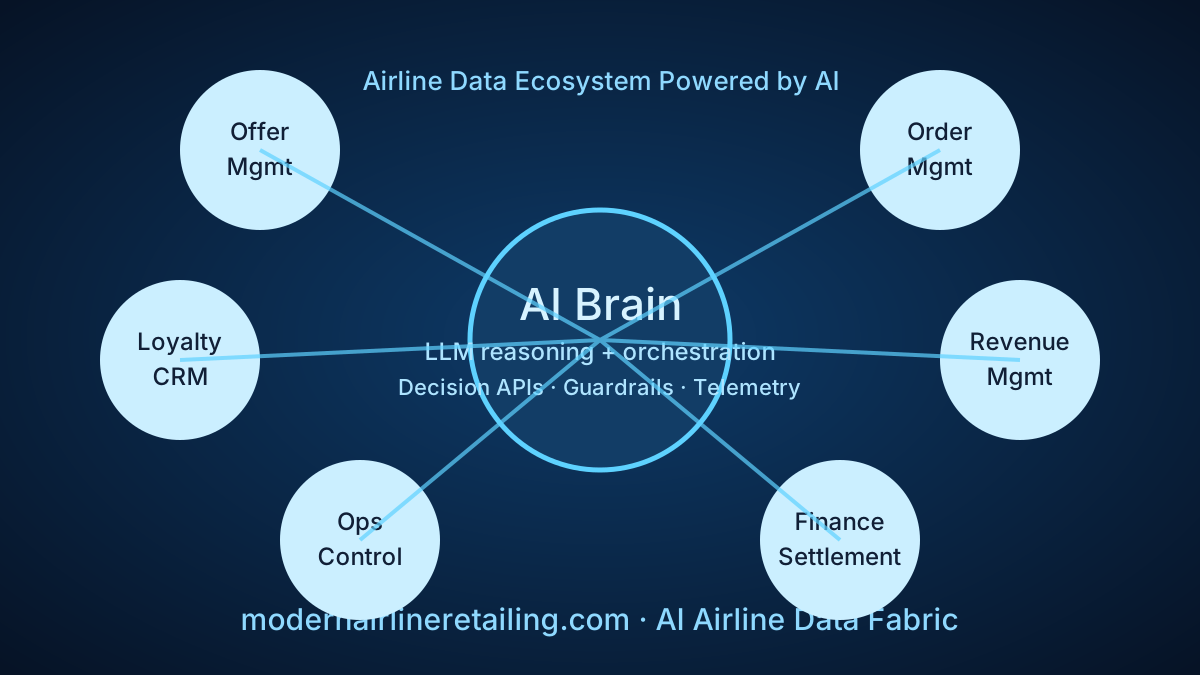
- Composable decision APIs expose LLM insights to revenue management, disruption management, and loyalty teams simultaneously.
- Closed-loop telemetry feeds offer performance back into training data, accelerating experimentation cycles.
- Order-native servicing automates voluntary changes, involuntary reaccommodation, and settlement through intelligent workflows.
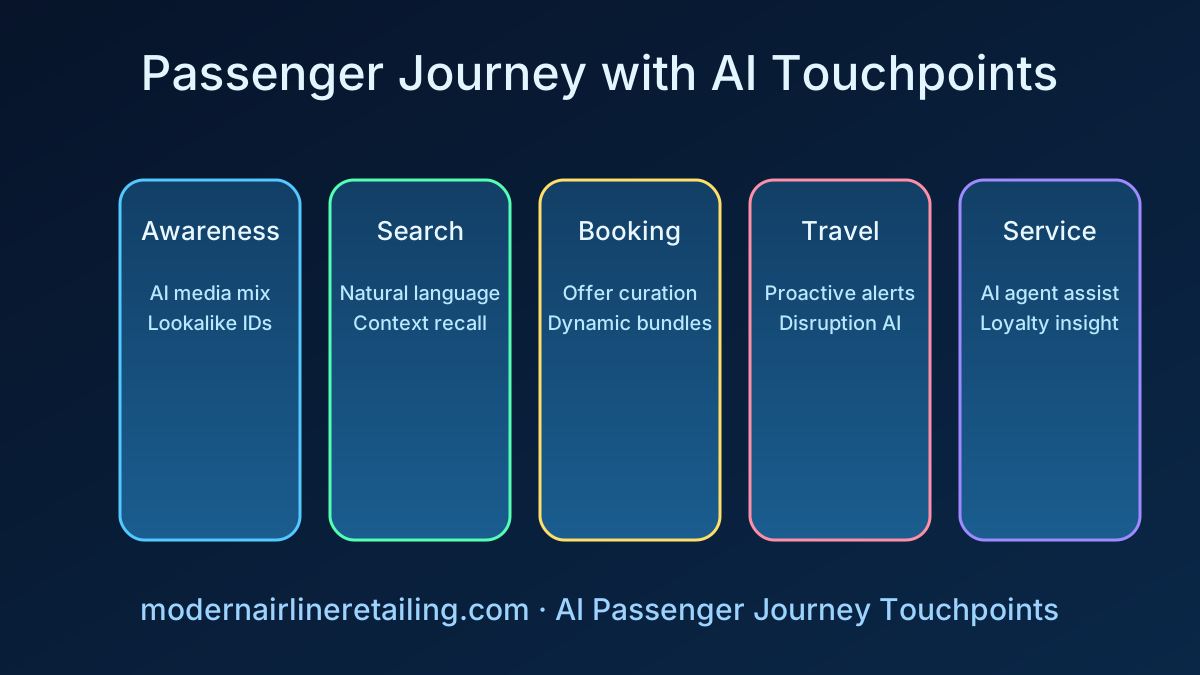
Expect airlines to launch domain-specific model factories, blending proprietary data with vendor models through secure enclaves. Offer and Order platforms will expose prompt-safe endpoints so that merchandising, disruption, and loyalty teams build LLM-powered skills without reinventing the wheel.
Vision Check: Airlines that master AI-driven retailing will shape the future of customer experience-turning every interaction into a personalized promise, and every fulfilled order into a loyalty moment.
7. FAQ
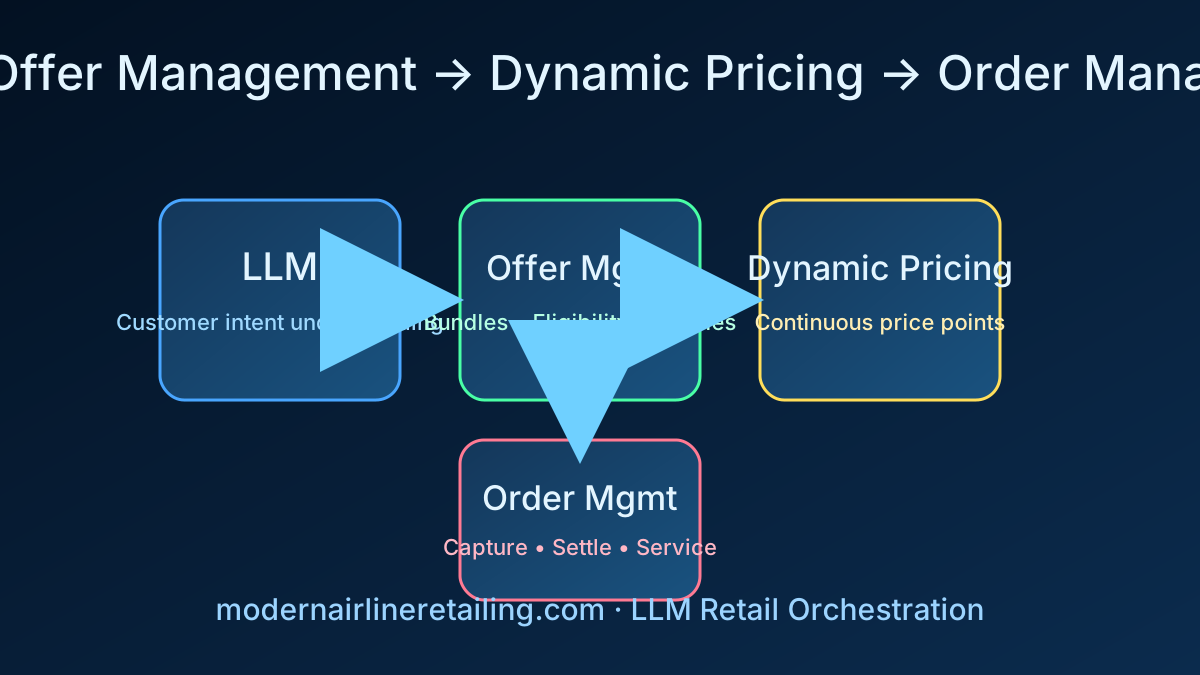
How do LLMs connect with airline Offer and Order systems? LLMs interpret intent and pass structured decisions into Offer Management APIs, which then call pricing and product services before creating orders.
Is AI ready for regulatory scrutiny? Yes-when airlines combine explainable AI techniques, audit trails, and policy guardrails, regulators can trace decisions back to verifiable data sources.
What skills do teams need? Data engineers, prompt designers, retail product managers, and governance leads must co-own LLM roadmaps.
References: IATA Modern Airline Retailing Whitepaper (2024); McKinsey & Company, “Travel Dispatch: AI in Aviation” (2023); Google Cloud + Amadeus, “Transform Travel with AI” (2023); IBM + Lufthansa innovation brief (2023).